The Preparation Layer
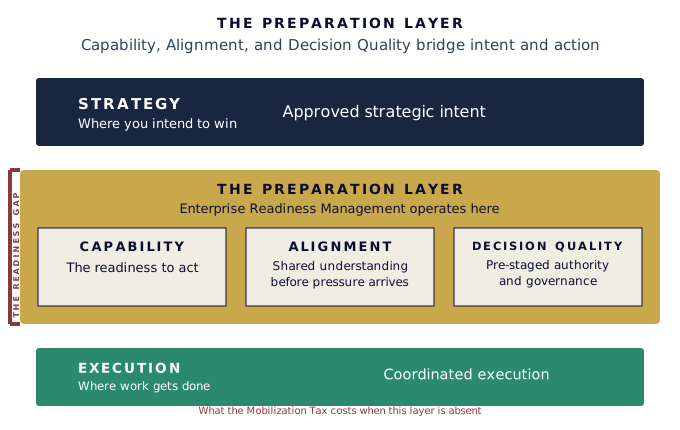
Between strategy and execution lies preparation that several management disciplines address in different ways. This book proposes the Preparation Layer as a way to make that work visible. It is organized around three dimensions: Capability, Alignment, and Decision Quality.
Some of the most consequential failures I saw were slow deteriorations an organization adapted to without ever naming. In several cases, projects needed more executive intervention than anyone expected. Peter Senge's work in The Fifth Discipline offers one explanation for why such patterns persist. Systems encourage the behavior their structures make natural. Leaders can respond to poor outcomes by adding effort inside a structure instead of examining it.
Departments may drift out of alignment, decisions take longer than expected, and the organization feels busier without proportionate results. These can be early signs of a widening Readiness Gap: the distance between what the organization faces and what it is prepared to handle. The gap may not show up on standard measurements until the consequences reach revenue, margin, delivery, or engagement.
Organizations invest in execution through project management, portfolio governance, resource management, and delivery metrics. These matter, but they do not always make preparation across the enterprise visible. Where leaders have not prepared authority, shared understanding, or response architecture, a significant situation can demand more assembly than they expect.
Nassim Taleb distinguishes between systems that merely survive shocks and those strengthened by them. That distinction helped me ask whether organizations learn from disruption or simply absorb its cost. I saw the Readiness Gap develop in global operations. A large initiative could open with a strong kickoff while cross-functional risks piled up beneath the reported status.
I worked with a global organization that had invested heavily in a well-designed, unified project management method, with clear governance and consistent reporting. Yet a regional office reported green on a workstream the central team was starting to worry about.
The regional lead was not misrepresenting anything. In her cultural and professional frame, green meant the work was on track as her team understood the plan. Signals from adjacent workstreams and vendors had not reached her, because surfacing incomplete concerns did not fit local professional norms. By the time the dependency risk became visible, it had delayed the program by months and required significant rework and additional resources.
Every report showed green. The organization had the information but no way to read what green meant in each local context. One governance structure can produce different behavior in different cultural frames. So instead of imposing one cultural model more rigorously, leaders can open several paths for signals to surface. They can also watch for cross-cultural misalignment.
Capability is the first preparation dimension: whether the organization has the knowledge, skills, systems, and processes to respond to the situations it faces. Alignment, the second, does not come from org charts or job descriptions alone. Deliberate communication architecture and governance design help build it.
Decision Quality is the third. An organization with strong capability and alignment can still move in the wrong direction when decision-making is poor. Decision Quality is more than individual intelligence. It is whether the organization surfaces relevant information, brings in the right perspectives, and supports collective judgment.
In the competitive-displacement situation described earlier, the organization had the capability to compete and an open window. What it had not settled was who owned the response. Two days passed before coordinated action began. The case illustrates how a gap in one dimension can constrain the others, though how the three interact will vary by context.
Building PMOs and transformation functions, I found that looking at Capability, Alignment, and Decision Quality together helped explain a recurring problem. Some organizations struggled to turn strong individual capabilities into coordinated work. Resource allocation models that treat preparation as optional overhead can widen the Readiness Gap and raise the Mobilization Tax.
These symptoms can have other causes, and the Readiness Gap is not simply a talent, commitment, or execution problem. Sometimes missing preparation forces the enterprise to assemble parts of a response from scratch. Where it does, building a Preparation Layer is one way to address it. Its effect should be judged in practice.